Friday, July 23, 2010

God is an argument waiting to happen


In a poem that dealt , somewhat, with God and theology, I made reference to God's best ideas being "cloud bound"; a conservative on the board where I posted the verse took exception and proceeded to say all sorts of nasty things. This is a little bit of that  exchange.

Wherever did you read about God being "cloud-bound"? Name one book stating this.

One cannot believe that you’re this much of a pop-culture illiterate. The popularized conception of in mass-culture is that God is in Heaven, and Heaven is in the sky, i.e., the clouds. It’s an image and an idea that is inseparable from the way we think, in the short form, of He who we call Lord. It’s in our literature, our poems, paintings, cartoons, and our movies. Ever see “The Horn Blows at Midnight” starring Jack Benny as an earth-locked angel? Rent it, since it is an amusing comedy utilizing the popular notion that Heaven, with God in it, is in the clouds. Really, Cal, are you actually this obtuse?

God commands us to "love one another" and obey the Golden Rule," and you adduce to Him bulliness?

. The God of the Old Testament was a bitter, cranky, vengeful deity, a bully in other words, and the message of the God we discover in the New Testament essentially demands that we serve his purpose and plans for Humankind lest we be judged and condemned to horrible, eternal punishment. He makes threats , in other words, and this is bullying behavior however you dress it up with transparent words like “love” and “sacrifice”.

Are you a Christian, and are these YOUR PERSONAL points of view?

Christian by birth and culture, but not a doctrinaire worshipper. God gave us minds to use, and it’s my guess that He , being God, isn’t in need of his self-esteem reinforced with coerced praise, and isn’t the sort of deity to threaten us with eternal damnation unless we play His grubby game of Theological Monopoly. My guess would further to say that this God of my understanding is likely bored with that whole business and thinks there more useful, creative ways to fill eternity . These are my views, but the ideas aren’t new. Inspiration comes by way of Soren Kierkegaard , Paul Tillich, Thomas Merton, Bill Wilson and Norman Mailer. The way the ideas are expressed are my words, though, based on my experience.


period

a glass of water

a pretense of rain

several men in a public bathroom stall

women named Jessee naming animals

toast, hot, buttered

no fuzzy dice

television with no sound

a handsome face moving its lips

no indirect route

a passenger seat

a broken window

the rock that broke the window.

Thursday, July 22, 2010

INCEPTION: sleep aid


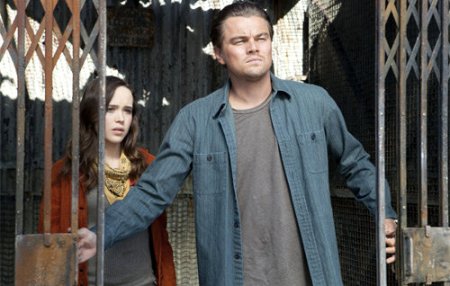
Inception was a colossal strain on my attention span , as was director Chris Nolan's previous film The Dark Knight. Both the films were well mounted and the available budgets were well used--as they say, you could "see the money on the screen"--but Nolan mistakes plot confusion and ambiguity for some variant of poetic ellipsis; some issues are unresolved, or forgotten about, it seems, as the crowded confines of I and DK pile on the dialogue, the mid-chase explanations, the chaotic , jagged cuts between parallel scenes. The plot concerns of Inception are the stuff that made Phillip K.Dick such a brilliant, if harried science fiction writer; Leonardo DiCaprio as a high tech industrial spy who has the skill and technology to enter a subject's mind during sleep and extract professional secrets for business rivals. The problematic point , though, is that he's haunted by the death of his wife, who's image keeps appearing in the dreamscape he and his team construct to fool the sleeping subject. She is the ghost that follows the team leader in whatever scenario he concocts-- her appearences no good.

Nor do they bode well for cohesive story telling; after a splendid first thirty minutes in which the viewer is landed in the middle of the action--a tasty variation of the James Bond tuxedo-ed assassin ploy--the film chokes on back stories, flashbacks, and stretches of dialogue that seek to contextualize the hurried scenes.

Had the film been a leaner, less cluttered tale, attempting, as it does, the sort of convoluted layering a competent commercial novel might have, Inception might have been an intelligent adventure film: issues of love, morality, political economy, redemption could have been discussed in conjunction with concurrent action. The abstract (a conventional set of ethical challenges , really) would have been realized cogently in the narrative flow. The movie, though, stops again and again and yet again with a flashback, an extended pause in the momentum, so DiCaprio can discuss his feelings, make a another emotional breakthrough.

Confusion and ambiguity were the working idea behind Momento, and to the degree that Nolan conceived his idea and worked through the variations of a memory-impaired man attempting to advance a plan of vengence in a present he couldn't keep in mind, it worked splendidly, wonderfully. The film had an ironic twist--a real one, not one of those cookie cutter conclusions that wallow in the irresolution of a conflict--which made the fractured plot coherent, finally,and illustrated consequences beyond what the hero or the villians could imagine.The various scenarios at play in Inception, though were, of themselves , simple enough, but Nolan's problem was pacing and, sorry to say, the inability to make the characters connect with a believable emotion. The film was rather frantically edited , and the cutting between the three dreamscapes in the last third of the film were long in duration. The effect on this viewer was a loss of interest in a mission who's impetus was more hysterical than urgent. 

All this makes Christopher Nolan a lead-footed action director who is intent on turning the pleasures of pulp genres into think pieces and talky existential dioramas. Economy is the key, of course, and decisiveness is the quality needed the most; conviction about the genre your using to get your narrative ideas across. A fresh idea would have helped , though, or at least a fresh approach on using old ones; Inception has deep echos of The Matrix, Heat and Solaris during it's length, the result being an interesting, if tedious distortion of what seems to have started out as an interesting idea.


Sunday, July 18, 2010

poets reviewing poets!

We now have a new form, circle--modernism. It's been bad enough that we've had to suffer a generation of dull poets writing poems about poetry (PAP) where the subject seems to be either the poet as sensitive being channeling the variety of vibes that the rest of us cannot discern, or the inability of poetry to "get" at the exactness of the moment. Now we have writing in praise of writing about poetry. 


There is a good amount of log rolling here, with more than a clutch of poets intent on not giving away the game on which careers and reputations are built on, but one does admire the adroit skill that gets applied to the least interesting of the least tangible poems. What is even more interesting is that a good amount of the essays exclaiming the value of these poets under nominal review don't actually explain how the poets are successful at their tasks; more often we get an examination as to the poet's intention, and then a long run in eloquence describing results that I , for one, rarely witness.


 I ought not generalize too much poets remarking on the work of other poets, since there is a difference between actual criticism-- evaluation based on close inspection--and the sort of careerist suck-upping one finds on the back of new books. There is the idea that some wag had put forwarded about poets who put forth their own theories about they and their associates do; the theory is more interesting than the poetry it discusses. It is, often enough, more poetic.

Friday, July 16, 2010

Hamlet's Ghost Catches the Late Train

Alan Shapiro tries to drop us in some one's thoughts midstream in Wherever My Dead Go When I'm Not Remembering Them , an attempt, I gather , to show us what a mind doing casual housekeeping when the ruling personality isn't focused observing himself being poetic. There is impatience here, the anxiety of the wait : the narrator cannot be engage the world as he would wish, to exert a measure of will on to his stage. The imperatives of free will, imagination, self-definition , following of one's bliss are for a time suspended, or at least irrelevant because our figure is here waiting for a train that will take him some other place he needs to be; this is a schedule not his own and this leaves him virtually nothing to engage but his own thoughts , inspired by the scene of the wait, the grind and mechanized stutter of the city the whirrs determindedly past him. The idea is an attractive one, I guess, the conceit of what a personality, normally fitted for turning their life's experience into miniaturized melodramas, would do in the off hours, when the mind is "off duty".

Impatience , though, implies something  like  film maker jump cuts, the jagged, abrupt , yammerng intrusion of one thought upon another, the overlay of images and opinions, the irrational mixing of personal history and visual detail from the present moment: the effect should be one similar to walking into a room where radio, CD players, televisions, internet and cell phones are all blaring at once, at full volume, with the same shrill , monotonous insistence. Shapiro's poem sags under the weight of a conventional narrative construction, weighed down with a string of specifics that kill the sensation:


Not gone, not here, a fern trace in the stone
of living tissue it can quicken from;
or the dried–up channel and the absent current;
or maybe it's like a subway passenger
on a platform in a dim lit station late
at night between trains, after the trains have stopped—
ahead only the faintest rumbling of
the last one disappearing, and behind
the dark you're looking down for any hint
of light—where is it? why won't it come? You
wandering now along the yellow line,
restless, not knowing who you are, or where,
until you see it; there it is, at last
approaching, and you hurry to the spot
you don't know how you know is marked
for you, and you alone, as the door slides open
into your being once again my father,
my sister or brother, as if nothing's changed,
as if to be known were the destination.
Where are we going? What are we doing here?
You don't ask, you don't notice the blur of stations
we're racing past, the others out there watching
in the dim light, baffled,
who for a moment thought the train was theirs.


This is more an impatient explanation by the poet of what he was trying to do with the poem than it is an a particular set of impressions of standing alone on a train station platform as thoughts invade awareness and then recede. The not so faint shadow of Hamlet attempting to speak to the ghost of his slain father isn't far off, and the poem suggests that a good many of us have incomplete conversations with our dead parents or spouses that we find ourselves conducting when the real world obligations are, for the moment, done with. But for all the emphasis on what rattles in the brain when it's tired and feeling rushed, the poem doesn't convince me. The writing sounds rushed, though, and in fact feels more like a convenient and easy to contrive self-dramatization than anything composed with assurance.


Where is the feeling of the world falling in? The nausea of the ground giving way under your feet? The lightheadedness when , in public, a host of repressed emotion and unresolved issues press upon you suddenly, severely, mercilessly? What's missing is the alienation effect, the familiar "made strange", in Bakhtin's phrase; the trains, the buildings, the cars passing by should be bereft of their normal assurances, including the easily conveyed sense of melancholy; this is a world that should seem, at least for the moment, possessed and defined by the dead. Shapiro, however, uses them as props instead to reinforce a conventional poetic sensibility, and misses a chance to write something genuinely strange and memorable.

Thursday, July 15, 2010

Birthday Note

Today marks my 58th year on the planet, another way of saying that it's my birthday, and there is less reflection on how I've spent my years than before, replaced, I suppose, but a low-murmuring astonishment that I'm still here, breathing, writing, whining, celebrating, arguing , laughing along with the rest of the community. It's not that I'm about to go soft in the head and the heart and profess reams of  steamy, flatulent prose about being grateful and such--even when I understand the awesomeness of an occasion, confessions of unending thanks make me instinctively--but I would like to briefly remark that at one point in my life I didn't expect to live this long. Good fortune intervened in my travels, however, and one might say that I am over two decades past what I expected to live until; that fact still astonishes me , the profundity of the fact has never escaped my thinking. It's in view of this fact that I go forward with what little real humility I have , secure in the knowledge that the miracle that I might have been waiting for in the past has already happened, and ,indeed, continues to unfold.

Thursday, July 8, 2010

School of Defeatitude

"Wissahickon Schist" by Karl Kirchwey is a poem that practically brags about it's failure as a poem. The brutal upshot is that the poet is not able to complete his self assigned task of bearing unaffected witness to a natural situation.The poet ponders the nature of nature and starts to write a line to crystallize his emerging perception and then stops, catching himself in the act of attempted epiphany, realizing at some point that for all the skills with words he's attained in many years of reading , they alone cannot avail him the unattainable essence of things before.So he stops writing, stares at the formations around him, the birds in their habitats, the plants and their reactions to the changing weather and realizes what it is he is missing. And later, turning himself into a second person "you", writes a poem about being overwhelmed by the sheer awesomeness of the nature he was trying to make even more extraordinary.

Ergo, another poem about poetry, or worse, a poem about being not being able to write a poem; this is a poem about the writer's impotence to get to the heart of the things that make up his world, those things no human , motivated by imagination and the imperatives of free will, had a hand in designing, constructing, arranging in situ. The imagination is reserved, finally, for creating a mythology for how all these things arrived in the states and ethereal essences that are their allure--the narratives of what is already visible, complete, and unto themselves. Myths, poems, epic dramas used to be the way we explained to ourselves the formations, disruptions, and inevitable continuity of the world, that a creation of metaphorical structures could link us to a grand design greater than ourselves; our task was to abide by the revealed law of the poetically evoked and make our place within the narration.

Science , though, has hollowed out the myth, made the metaphors mechanical, reduced mystery to the level of the lost cell phone we will eventually find if we look hard enough. We know the connections between natural phenomenon, we realize the power of metaphor exists only in the arenas where the concrete facts and their theories are unknown, unimagined. So the metaphors are empty and the poet realizes he has no power to contain even the contents of his perception, and he stops writing and seeks rather to vanish back into the library to lick his wounds with another poem that confirms the sheer futility of being a poet in the first place. This poem is a stinker, a dishonest, whining stinker.