Monday, February 23, 2009

Ted Berrigan


The Collected Poems of Ted Berrigan
Edited by Alice Notely (University of California Press)

It's not enough that we have the same first name and the same Irish second initial, my attraction to Berrigan's poems was the rather nonbelligerent way he ignored the constricting formalities in poetry and rendered something of a record of his thoughts unspooling as he walked through the neighborhood or went about his tasks.
"Where Will I Wander" is the title of a recent John Ashbery volume, and it might well be an apt description of Berrigan's style; shambling, personal, messy, yet able to draw out the sublime phrase or the extended insight from the myriad places his stanzas and line shifts would land on.

10 THINGS I DO EVERY DAY
by Ted Berrigan

wake up
smoke pot
see the cat
love my wife
think of Frank

eat lunch
make noises
sing songs
go out
dig the streets

go home for dinner
read the Post
make pee-pee
two kids
grin

read books
see my friends
get pissed-off
have a Pepsi
disappear


This takes my breath away, the idea of a series of sighs and mumbled asides rise to an audible sequence and provide the minimal but powerful considered portrait of the daily grind, the awful routines we commit to rather than pursue our what once might have been thought of as our true callings; the voice hangs on the end of the short lines, as if in suspension, waiting for an affirmative line or joke to lighten the tone, but this remains the bone-picked image of borderline despair, the slow death.
"...have a Pepsi /disappear..." encapsulates the mood , and makes it clear that sometimes one feels the words one speaks to others comes from elsewhere, not our souls, certainly not our mouths.

The world radiated a magic and energy well enough without the poet's talents for making essences clear to an audience needing to know something more about what lies behind the veil, and Berrigan's gift were his personable conflations of cartoon logic, antic flights of lyric waxing, and darkest hour reflection , a poetry which, at it's best, seemed less a poem than it did a monologue from someone already aware that their world was extraordinary and that their task was to record one's ongoing incomprehension of the why of the invisible world.

The Crisis in American Poetry: NO MORE GREAT POETS??

New York Times writer David Orr begins a recent article with a great hook for poetry readers, that Library of America has issued a volume of poems by John Ashbery. Terrific enough, we think, but this a segue for what he really wishes to talk about, that the publication of this particular volume of Ashbery's poems signals that soon we will be without a Great American Poet once Ashbery, now 83, passes on. He writes What will we do when Ashbery and his generation are gone? Because for the first time since the early 19th century, American poetry may be about to run out of greatness.  The entire  piece can be read here.

A decent read, as far as it goes, but there's something that sounds much too ginned up about Orr's assessment. The sudden obsession with greatness in American poetry seems a phony crisis amid a plentitude of real ones. Greatness in a poet is not at once obvious, and in fact one must confess the great reputations of Whitman, Stevens, Williams and even Ashbery himself are socially constructed. It has everything to do with an accumulation of critical opinion, a subjective lagoon if one ever existed in nature; Ashbery, great as I think he is, didn't come by his greatness over night, and I think the best way he got his current stature is the fact that he didn't die , he didn't quit writing, and he kept publishing. I doubt there's anyone we'd consider a Great American Poet who didn't come by their standing as Great much the same way. One might also remember that our great poets in their day became great over turning previous standards and establishing their own, signature innovations that, in turn, became the standard for generations afterwards. Ashbery is the last great American Poet of his generation, perhaps, but he isn't the last great poet this country will ever have. 

Saying so falls into the fretting, hang wringing sub-Spenglerites who want to predict the death of various arts and institution--the novel, painting, theatre, whatever is old, venerated and in need of a bullet to the head. It's a straw man argument; what we'll have is a new standard, introduced by a generation interrogating an critiquing the previous efforts and ideas of the older avant gard, poems and ideas most of us will no doubt be disgusted by, but new ideas that, with time and new distribution technology, will become a new standard, an addition to the canon, until such time their sons and daughters figure it’s time to knock the current crop of musty posers from their pedastals.

Sunday, February 22, 2009

A statement about poetry

The validity of any theory of poetry rests in how well it works in actual poems, not in how well turned the theoretical phrasing is.
There should be an absolute minimum of poems about poetry; poets, regardless of politics or aesthetic preference , really need to turn their language skills to the world and not onto themselves or their craft. Poems about poems , for me, is analogous to building cars from the spare parts of old cars--the enterprise will just collapse under it's own conceited laziness unless something fresh, alien and external , from outside the poet's subjective being and his or her ingrained habits of rhetoric, that would challenge the given assumptions a habit of phrasing would other wise lead a poet to rest upon. The poem is a vehicle to engage reality, not to wish it away with an obsession with it's own form.

Difficult poems are not to be discounted merely because they're difficult. There are poets who layer their works in ways that reward the effort to understand them on their own terms. There are things that cannot really be written about simply, and require genius to have the language extended to the point that a carnivalization of our paradigm can be contained with the word systems we were born with--Louis Zukofsky, Charles Olson come to mind.

Clear, concise, "objectively" coherent poems are not to be discounted merely because they make sense to the reader in more conventional ways. There's quite a bit of complaining about the "School of Quietude" that dominates poetry awards, and for the most part I share the disdain--faux confessional bits of inconsequential meditation that does not arise above a listing of wistfully arranged images and an implied, defeated sign, all in the moment. It's off putting and it's a cheat on the craft. But there poets who can compose the lyric that can bring a number of ideas , images, bits of memory to a single moment, a synthesis perfectly realized, truthfully told, without verbal padding. I think of Thomas Lux, my friend Peter Dragin, Paul Dresman, Kate Watson. This is not to say that these smaller poems are the only things these writers compose, far from it. But the smaller ones, about smaller things, should be respected when the near perfections are created

An absolute minimum of literary language and reference; excessive reference to other writers , philosophers, and the like makes me think that someone is hiding their college syllabi and hasn't yet learned to write honestly about their experience. Other writers should be the models, not the frameworks of what a younger poet writes.

Saturday, February 21, 2009

Rae Armantrout Tonight at D.G.Wills Books

D.G.Wills Books: "Acclaimed Poet

Rae Armantrout
will read from her new book
Versed
Saturday, February 21st, 7pm .

Rae Armantrout has always organized her collections of poetry as though they were works in themselves. Versed brings two of these sequences together, offering readers an expanded view of the arc of her writing. The poems in the first section, Versed, play with vice and versa, the perversity of human consciousness. They flirt with error and delusion, skating on a thin ice that inevitably cracks: “Metaphor forms / a crust / beneath which / the crevasse of each experience.” Dark Matter, the second section, alludes to more than the unseen substance thought to make up the majority of mass in the universe. The invisible and unknowable are confronted directly as Armantrout's experience with cancer marks these poems with a new austerity, shot through with her signature wit and stark unsentimental thinking. Together, the poems of Versed part us from our assumptions about reality, revealing the gaps and fissures in our emotional and linguistic constructs, showing us ourselves where we are most exposed. Rae Armantrout is Professor of writing and literature at the University of California, San Diego, and the author of ten books of poetry."

Friday, February 20, 2009

A poem by Peter Dragin


One of the grand things of being a minor poet is that one gets to make friends with those who are just better poets, but interesting and utterly cordial folks. Peter Dragin is one of these folks, a writer with whom I was in the 1996 anthology Small Rain: eight poets in San Diego. with an elegantly Buddhist drift who has the ability to frame an irony or adjudicate contradictory perceptions with an elegance I find marvelous. I have simply wondered time and again just how he can make his associative leaps without leaving a long trail of language in his wake; it's not that he's getting to a point in his poetry, he's arriving at a destination.I've been struck by a particular poem while re-reading sections of the anthology, "There Are No Alternative Fuels", appropriate to the current alarm of global warming and financial meltdown.

THERE ARE NO ALTERNATIVE FUELS
Peter Dragin

We are all in all afloat
in the empty space
of our atomic flesh:

presence once arrived
greets presence
ever arriving

in the house
made of heat;

in the forest's
hospitality to
the rising sun's light,

in prime ordered
stillness and silence

where birds wing and
make song as they warm

dwells the work.

Each compression and expression of lips, teeth and tongue,
imagine it makes one dawn,

imagine brain's measure
in vibrant silence and heat;

we are all
Ancient in Days, so

tell me what you could
possibly want
from torching the Amazon,

the rape and mutilation
of every family
tribe and nation on earth:

what's your pleasure?
A car of your own?

Peter, it seems to me, identifies us all as creatures requiring heat to survive just as the planet requires the heat of the sun to thrive and sustain it's life cycles, but confronts what happens when we want more heat than what we need. We become drunk on what it is combustion can power, and we assume a kind of entitlement to having resources used to drive our convenient technology. We are the same, he writes, "We are all in all afloat /in the empty space of our atomic flesh", linked to a seemingly unlimited chain that links us to every living thing and every particle of air, but we have forgotten that our lifestyles, not just our individual actions, have consequences. Our economics and the popular culture it sustains is destroying the fertile ground every species being and living specimen require to live and reproduce.  It's a world seared by the accumulated residue of whole cities, suburbs, country sides full of citizens letting their cars idle , their air conditioners run, their televisions blasting, the inert remnants of coal and oil fires falling on our skins, choking our pores, infecting our lungs, darkening the sky, murdering a planet that was once balanced. The Eden that Peter imagines here is mythical, to be sure, and it seems he sets this up to make a point that comes straight ahead, catching you surprised. So, here we are at the end of the world that didn't have to come, and what was this sacrifice all for?

Our right to get and run our "stuff"?

The past never happened

New York Times columnist David Brooks wrote a couple of years ago that the world he now lives in less nice, less patient, less sane than the world he grew up in. Typical for columnist faced with deadline without a lead line, the writing machinery shifts into automatic pilot. Brooks' machinery on this day is a time machine, where we find a wonderful country called The Past. Brooks seems to visit there quite often, perhaps with a wish to be represented in better days by having his profile caught on canvas by a visiting Norman Rockwell. 

The general drift is that maybe Americans were smarter than we are now, that there was a classier way of comporting yourself through both "good wars" and less dramatic circumstances by an adherence to a private code of integrity, that magazines and publishers and the like weren't afraid to offer up features on art, opera and serious literature as means to improve the soul of its readership. Sigh...Brooks must have been having a John Cheever moment, full of diminished, muted light, chiming sounds and the smells of fall , only unlike Cheever, who realized that such security found in the lap of absurd privilege is fleeting and not a panacea for the stress that creases the soul, our columnist seems to believe the mythology of his own youth. Cheever, a noted alcoholic who conquered his affliction for the sauce late in his life brought from that experience the notion that nostalgia, untrammeled, untamed and wallowed like warm mud, is a slow and odious death of the spirit. Rather than rage, we get sighs and regrets, rather than laughter, we get weeping. Brooks reads as though he's on the border of crossing into the land of What If... Interesting, of course, that he places his nostalgic wanderings in the page of old magazines, when there was much less media to tell us how the world worked and what it all meant. It was easy to flip through these pages from decades ago and be able to conceptualize the world as a place where only a limited number of significant things happened from week to week; this was reality presented to us as lateral narrative. 

The truth is not that the world used to be better and has become worse, more coarse, but rather it's gotten bigger, continuous, multi-headed, sleepless, with a limitless range of Internet, cable and satellite venues to tell us what in the world is going on, with limitless slants, angles, perspectives, interpretations and fanatical absolutism to color each and every report. Brooks mourns the death of the Grand Narrative, the unifying but frayed line that connects the progress of our race through time, and finds himself upset at the surfeit of smaller narratives that have their particular ideas of history, culture, religion, political expedience. Brooks has a bad case of Post Modern Condition. A typical symptom is the writing of columns like this one that, while well phrased and richly detailed, actually has no message other than that things aren't what they used to be. The harder lesson after that is realizing that things never were they way they used to be.

Poe's Memory from Before Birth


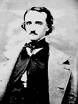
It would be a mistake to approach Edgar Allen Poe with the expectation that there's a solid intellectual argument occurring in his poems.He might insist that there is, in his essays like "Eureka" that have been unearthed over the decades by scholars trying to bring the poor Poe man up to par with the smartest literary sorts, but the fact is that Poe was not much of a thinker. He wasn't a thinker, but he did give articulation to undercurrents of human desire that have had, perhaps, a farther reaching effect in the culture than any straight explication could have.In any case, I think it a mistake to approach Poe with the expectation that there's a solid intellectual argument occurring in his poems.He might insist that there is, in his essays like "Eureka" that have been unearthed over the decades by scholars trying to bring the poor Poe man up to par with the smartest literary sorts, but the fact is that Poe was not much of a thinker.

He was a , as a poet, a virtuoso of leaping rhyme and alliteration and had a chiming quality that could suggest the phonic equivalent of fifes, flutes, bells and other kinds of sparkling effects, but he was also a a genius of mood, despair, obsession; much of the time what the artist explores and renders exposed in terms of material we learn from is not the result of conscious decision.(One does admit, though, that his dissociation of sensibility in the sheer sensory overload of decay that made his metaphors and similes ripe with rot likewise sacrificed sense and logic and as often as not became a species of hackwork, an exercises of hackwork the writer of which tried to elevate to greatness by extreme bouts of overwriting the same limited scale of ideas.)"The Raven", "Lenore", "Annabelle Lee" are fairy tales for depressives, explorations into a world where everything has run down and had the joy sucked out of it; the correlation with the bruising details of his own rearing is obvious enough.

Poe was a precursor of decadence to come, through which beauty had been redefined as something being achieved only in a living thing or object's point of decay. Poe's is the poetry (and stories)that gave rise to the notion that funeral detail and a desire for the last nap called death are attractive and to be desired, and suggesting that the the dark side was actually a means to achieving a higher aesthetic being.

Poe's work is about disintegration, evaporation, dis corporation in all manner, where expertly honed rhymes and rhythms of his writings disguise but then reveal the burning, churning glory of pure form, energy, freed of the bondage of corporeal existence. Poe wrote quite a few essays outlining these ideas, particularly "Eureka" and "The Philosophy of Furniture". In his fiction, "The Fall of the House of Usher" is his most vivid and brilliant realization of his idea of metaphorical entropy.He was a , as a poet, a virtuoso of rhyme and alliteration and had a chiming quality that could suggest the phonic equivalent of fifes, flutes, bells and other kinds of sparkling effects, but he was also a a genius of mood, despair, obsession; much of the time what the artist explores and renders exposed in terms of material we learn from is not the result of conscious decision."The Raven", "Lenore", "Annabelle Lee" are fairy tales for depressives, explorations into a world where everything has run down and had the joy sucked out of it; the correlation with the bruising details of his own rearing is obvious enough.

In one of his essays, Edgar Allen Poe summarizes one the essential elements of his philosophical musings by asserting that we are cursed with "the memory from before birth", a slight and wavering recall of a time when calm and serenity were in place and there was nothing of the distortions or crass money, family, or religion to make us nervous, devious, only half alive (if "alive" at all). The upshot of his baroque hypothesizing was, to be sure , our constant and at times overwhelming desire to return to such a nocturnal, darkened, stress less state, a return to the womb, perhaps; in any event, his misgivings were a desire for sleep from which one needn't wake up from, death in other words.

Following suit are Poe's peculiar interest in things decadent and decaying, those thin , reedy and tubercular characters of diseased gentry and errant aristocratic stock who hang on to the waking life by a mere thread, effete and defeated and gracefully blended into the material realm, waiting for gravity to take its toll and to become themselves receivers of the dirt nap, freed of the binds that only punish you for having nerve endings.

There was, among the decadent writers and artists following Poe, a literal worship of an aesthetic principal that the greatest beauty was in a person or a thing in it's decline, when it was letting go of the struggle and was reduced to it's basic, most true and frailest form. An aspect of this, I suspect, was envy of the declining aesthetic object, be it a human or a diseased elm; a deep and permanent rest awaited them, and death would be that thing that gives the lie to the certitude of philosophy or economic determinism that insist that life must forever be thus, a certain way, without change. Those who die have escaped, and there are no arms to bring them back to suffer more with the rest of us pining over a grave.

Poet Patricia Traxler gets all this wonderfully in her poem The Dead Are Not in this week's Slate, succinctly in her poem The Dead Are Not; as rob and others have already remarked, the poem is brief and each finessed line conveys the complicated, conflicting and confused set of emotions one
journeys through as yet another death comes closer to one's inner circle of confidants and family. Indeed, the dead are not dead yet,

Always they take
their time, and we wait
politely, dreading
how real it will
have to be, sooner
or later, and at the
same time longing
to know that reality.


There are arguments one has with the departed, negotiations still in session, curses and protests of undying love are uttered, self-recrimination and blaming goes on for days and nights until one tires of the their tears and breathes easier because sunrises still come inspite the weight of grief. We mutter to ourselves that the dead are
"in a better place", that they "felt no pain" or that
"...at least they died quick..." all so we get on with our lives and our responsibilities, and yet an echo of our accepting rhetoric stays with us as we shoulder our daily responsibilities, that "better place" doesn't sound so bad, and we become envious and petty all over again, we blame the dead for being cowards and laggards who would do anything to shirk their duty, and we come to envy them and that place they've gone. Gravity takes its toll, our bones ache, the mailbox is filled with bills, someone else you know has told you they have a fatal disease, your back hurts like shit:

Nights, as we reach
to switch off our bed lamps
and close our eyes,
we dare it to take us
into its mouth
that smells of tar,
saltwater, sludge,
take us up then let us
tumble endlessly,
blameless again
and helpless as any new life
forced out for the first time
into the terrible light.


Traxler gets to the center of that guilty little secret
at the core of grieving, the scourge of envy and the many faces and tones of voice it takes. Without metaphysical baloney, faux piety, or even a tone of anger, she writes in the cool, reflective calm of someone who has investigated their feelings and discovered an unknown fact about their thinking. This poem has the remarkable clarity of genuine self-sight, unnerving in its tone, beautifully expressed. Her skill gives us the chance to see something very private, unobscured by clouds of delusion. A very fine poem.